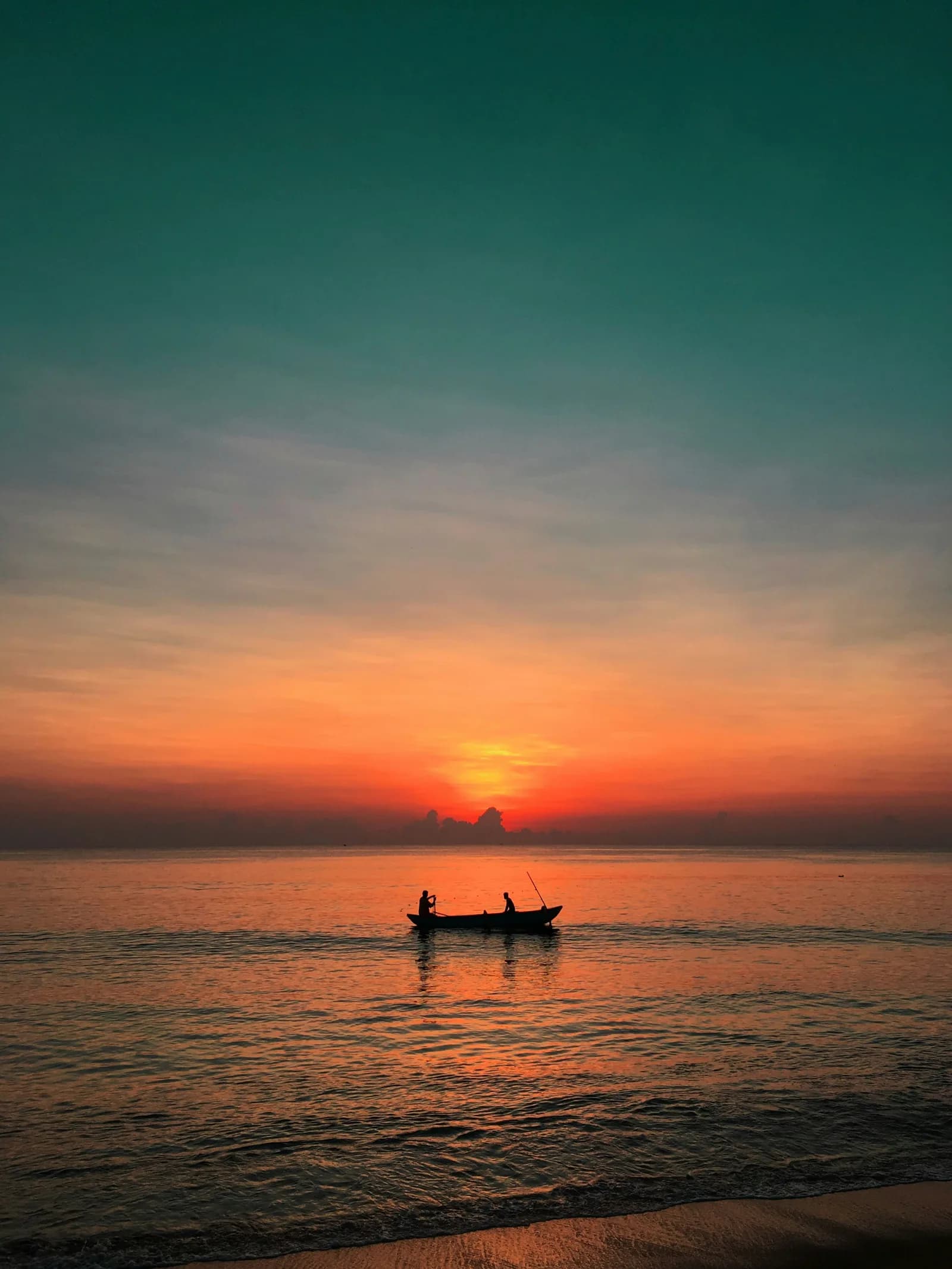
Delft Island Expedition & Feral Ponies
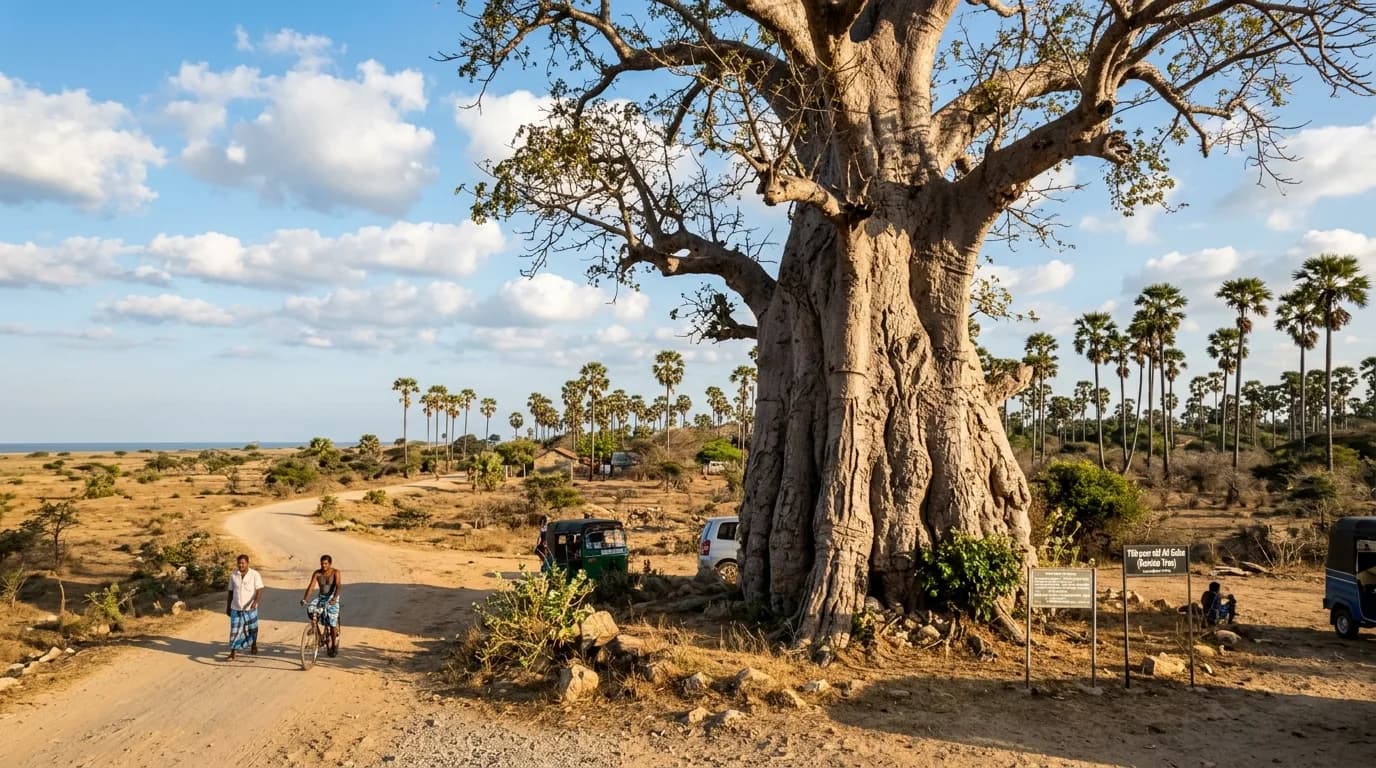
Delft Island (Neduntheevu) is a remote, windswept coral island located 30 kilometres off the Jaffna Peninsula in the Palk Strait. Reached by local passenger ferry from Kurikadduwan jetty, the island features wild feral ponies introduced by Portuguese and Dutch colonisers, ancient coral-stone walls, a ruined Dutch fort, and a giant hollow baobab tree.
- Location
- Neduntheevu, Jaffna District, Northern Province
- Access
- Passenger ferry from Kurikadduwan (approx. 45–60 mins)
- Terrain
- Flat limestone island with coral-stone boundaries
- Key Wildlife
- Feral ponies, migrant birds, coastal seabirds
What makes Delft Island unique in Sri Lanka?
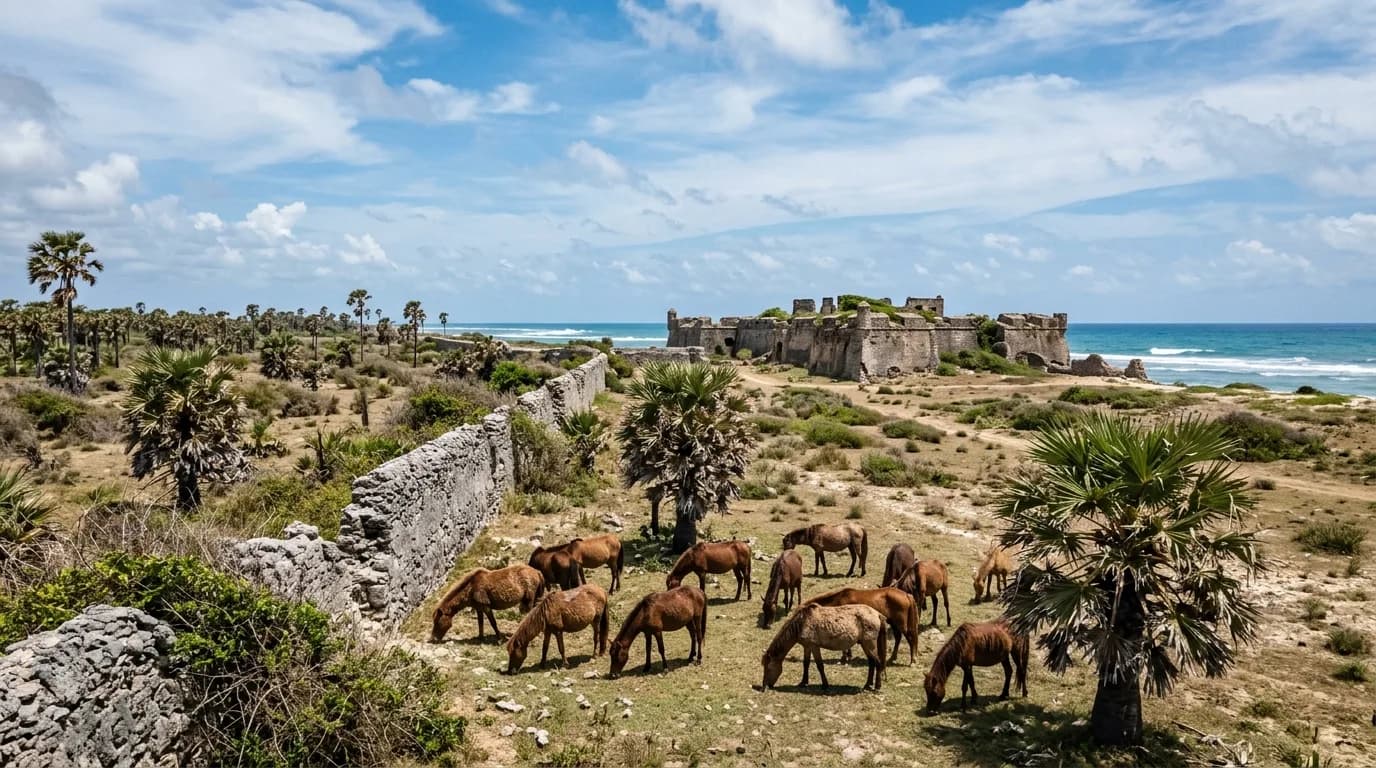
Delft feels completely distinct from the rest of Sri Lanka. Built almost entirely on a foundation of marine coral and limestone, its rural lanes are framed by dry-stacked coral walls rather than hedges or fences. The windswept landscape is dotted with palmyra palms, wild aloe, and grazing cattle.
The island's most celebrated residents are its herds of feral ponies, descendants of horses bred here under Portuguese governor Philippe de Oliveira and later expanded by the Dutch East India Company. Today, around 500 ponies roam freely across the island's protected communal grazing pastures.
- The Dutch Fort ruins, constructed from rough-hewn blocks of coral limestone
- The hollow Baobab tree, with an enormous bulbous trunk large enough to step inside
- The Dutch horse stables and water trough network from the colonial breeding programme
- The Growing Stone (Pigeon Cage) and ancient Chola stupa archaeological remnants
How do you reach and explore Delft Island?
Your private chauffeur-guide drives across the scenic Jaffna causeways via Kayts and Punkudutivu to Kurikadduwan Jetty (KKD). From here, a regular passenger ferry or private charter boat crosses the open Palk Strait to Delft Island in 45 to 60 minutes.
On arrival at Delft's quiet pier, local transport is by open-air pickup truck or private safari vehicle adapted to navigate the island's sandy, unpaved coral roads.
Practical tips before you go
- Delft has very little natural shade; bring sun protection, a wide-brimmed hat, and plenty of drinking water.
- Wear sturdy walking shoes suitable for sharp coral stone surfaces.
- Check ferry sailing times carefully in advance with your Zelenso guide to match seasonal sea conditions.
- Sample a fresh seafood lunch prepared by an island family, featuring authentic Jaffna-style crab and fish.
Frequently asked questions
Are the wild horses of Delft dangerous?
The ponies are semi-feral and accustomed to human presence from a respectful distance. Travellers should observe and photograph them quietly without attempting to feed, touch, or startle them.
Can Delft Island be visited on a day trip from Jaffna?
Yes, Delft Island is ideally visited as a comprehensive day trip departing Jaffna town after breakfast and returning by mid-to-late afternoon.
What is the best time of year to visit Delft Island?
November to April offers the smoothest sea crossings and pleasant northern coastal temperatures. The island can be visited year-round, though sea conditions are choppier during the southwest monsoon.
More experiences you may like
Year-round (best November – April)
Discover your next Sri Lanka adventure
From ancient sacred temples and misty tea highlands to serene golden sunsets, let our experts curate your perfect private island journey.