Planning Sri Lanka from Germany? Start Here.
Sri Lanka is one of the most rewarding long-haul destinations for travellers departing from Germany. Within a compact landmass roughly the size of Bavaria, the island packs eight UNESCO cultural citadels, mist-shrouded Ceylon tea plantations, world-record leopard densities, wild elephant herds, and palm-fringed tropical coastlines.
Allows a balanced, unhurried circuit with multiple 2-night bases.
The dual monsoon ensures sunny beaches across all seasons.
Direct flights with SriLankan Airlines; 1-stop from MUC/BER/DUS.
Complete flexibility, safety, and comfort on local roads.
High Euro purchasing power delivers boutique luxury at modest cost.
Apply via official portal (eta.gov.lk); 6-month passport validity.
Plan Your Sri Lanka Journey from Germany
Select your departure hub, travel dates, holiday length, and holiday focus. Our engine configures the optimal seasonal route, beach coast, and safari focal points.
Monsoon alignment: East Coast Season
Private chauffeur-guide included throughout with flexible daily scheduling.
Your Sri Lanka Blueprint (Jul)
East Coast (Trincomalee, Nilaveli, Pasikuda, Arugam Bay)
Glorious summer sunshine (31–34°C) with calm, clear azure waters in the East; warm and dry in the Cultural Triangle.
Negombo → Sigiriya Citadel → Minneriya Elephant Gathering → Kandy Perahera → Knuckles Range → Trincomalee & Pasikuda Luxury Beach
Minneriya / Kaudulla National Park (World-famous Elephant Gathering of 200+ wild elephants)
Why Sri Lanka Is Worth the Journey from Germany
For decades, long-haul travel from Germany to Southeast Asia has followed familiar pathways: the bustling islands of Thailand, the beach clubs of Bali, or the static overwater resorts of the Maldives. While each destination offers distinct pleasures, Sri Lanka occupies a singular space in world travel that feels particularly compelling to German travellers who value authenticity, cultural depth, and natural diversity.
Unlike expansive continental nations that require repeated domestic flights to transition between mountains and coastlines, Sri Lanka possesses an extraordinarily compact geography. You can awaken in a 19th-century Ceylon tea planter's bungalow at 1,800 metres amidst cool highland mists, board an open-window mountain train curving across deep granite ravines, track wild leopards and sloth bears through dry scrub savanna by late afternoon, and dine on fresh lobster with your toes in the sand of a candlelit southern beach by dusk.
Dense Biodiversity
Asia's highest leopard concentration in Yala and the historic Minneriya Elephant Gathering of 200+ wild pachyderms.
Living Ancient Culture
2,500 years of documented Buddhist architecture, cave citadels, and hydraulic reservoir engineering that predate European cathedrals.
Tailor-Made Privacy
Private chauffeur-driven travel is accessible, personal, and civilized, allowing spontaneous stops and bespoke daily pacing.
Crucially, Sri Lanka rewards travellers who seek human connection. The hospitality here is not a rehearsed hospitality school performance; it is deeply rooted in island culture. Whether taking a roadside break to drink fresh king coconut water (*Thambili*) sliced open with a machete or walking through village paddy fields with a local farmer, your journey feels grounded, warm, and restorative.
Flying from Germany to Sri Lanka
Connecting from Germany to Sri Lanka is straightforward, with options ranging from the only non-stop direct flight from Frankfurt am Main to high-frequency one-stop connections through Middle Eastern hubs.
All international flights arrive at Bandaranaike International Airport (CMB), located in Katunayake, approximately 32 kilometres north of central Colombo and just 15 minutes from the coastal resort town of Negombo.
| Departure Hub | Airline & Route | Elapsed Duration | Key Advantages | Indicative Return Fare (€) | Best For |
|---|---|---|---|---|---|
Frankfurt am Main (FRA) Typically 3 flights weekly (seasonal timetable) Non-Stop Direct | SriLankan Airlines Direct non-stop (Frankfurt FRA → Colombo CMB) | Approx. 9h 45m – 10h 15m |
| €880 – €1,080 (Shoulder) €720 – €880 (Low) / €1,180 – €1,550 (Peak) | Travellers prioritising maximum convenience, quickest elapsed flight time, and seamless Rail&Fly integration from anywhere in Germany. |
Munich (MUC) Daily departures (multiple daily frequencies) | Qatar Airways / Emirates / Etihad 1-stop connection via Doha (DOH), Dubai (DXB) or Abu Dhabi (AUH) | 12h 30m – 14h 45m (including 2–3h layover) |
| €820 – €980 (Shoulder) €690 – €840 (Low) / €1,050 – €1,420 (Peak) | Southern German travellers seeking daily departure flexibility, premium business class cabins, or competitive fare sales. |
Berlin Brandenburg (BER) Daily departures | Qatar Airways / Turkish Airlines 1-stop connection via Doha (DOH) or Istanbul (IST) | 12h 45m – 15h 15m |
| €810 – €960 (Shoulder) €680 – €830 (Low) / €1,020 – €1,390 (Peak) | Travellers based in Berlin, Brandenburg, Saxony, and Eastern Germany. |
Düsseldorf (DUS) Daily departures (twice daily Emirates flights) | Emirates / Qatar Airways 1-stop connection via Dubai (DXB) or Doha (DOH) | 12h 50m – 15h 00m |
| €840 – €990 (Shoulder) €710 – €860 (Low) / €1,080 – €1,450 (Peak) | Holidaymakers from Cologne, Düsseldorf, the Ruhr Valley, and western Germany. |
Hamburg (HAM) Daily departures | Emirates / Turkish Airlines 1-stop connection via Dubai (DXB) or Istanbul (IST) | 13h 10m – 15h 30m |
| €830 – €990 (Shoulder) €710 – €870 (Low) / €1,060 – €1,440 (Peak) | Travellers from Hamburg, Schleswig-Holstein, Bremen, and Lower Saxony. |
Frankfurt am Main (FRA)
Direct non-stop (Frankfurt FRA → Colombo CMB)
Typically 3 flights weekly (seasonal timetable)- Only non-stop flight connection between Germany and Sri Lanka
- Official Deutsche Bahn Rail&Fly partnership valid from any German train station
- No transit layovers or risk of missing Middle Eastern connection flights
- Generous baggage allowance tailored for holidaymakers (typically 30kg checked)
Munich (MUC)
1-stop connection via Doha (DOH), Dubai (DXB) or Abu Dhabi (AUH)
Daily departures (multiple daily frequencies)- World-class 5-star inflight entertainment and award-winning onboard service
- Exceptional frequency with convenient overnight departures from Munich
- Modern wide-body aircraft (Airbus A350, Boeing 787 Dreamliner, Boeing 777)
- High reliability with smooth transits at Hamad International or Dubai
Berlin Brandenburg (BER)
1-stop connection via Doha (DOH) or Istanbul (IST)
Daily departures- Direct daily long-haul connections from the capital region without transiting Frankfurt
- Convenient evening departures allowing you to sleep on the long leg to the Gulf
- Turkish Airlines offers excellent regional coverage via Istanbul (IST)
Düsseldorf (DUS)
1-stop connection via Dubai (DXB) or Doha (DOH)
Daily departures (twice daily Emirates flights)- Direct departure from the heart of North Rhine-Westphalia (NRW)
- Double daily Emirates service provides unmatched flight timing flexibility
- Short transfer times at Dubai International Airport (DXB)
Hamburg (HAM)
1-stop connection via Dubai (DXB) or Istanbul (IST)
Daily departures- Serves Northern Germany directly without requiring ICE train transfer to Frankfurt
- Consistent luggage check-through all the way to Colombo Bandaranaike (CMB)
- Emirates provides comfortable wide-body connections throughout
Arrival Timing and Jet Lag Strategies
Sri Lanka operates on Sri Lanka Standard Time (UTC +5:30). During the German winter (CET), Sri Lanka is 4.5 hours ahead of Germany; during the German summer daylight saving period (CEST), the difference shrinks to just 3.5 hours ahead. This modest time difference means German travellers experience minimal jet lag compared to flights to the Far East or Americas.
Most flights from Frankfurt or the Gulf land in Colombo either early in the morning (between 04:30 and 08:30 AM) or in the early afternoon. To ensure your holiday begins smoothly, Zelenso recommends spending your arrival night in coastal Negombo rather than making an immediate 4-hour drive into the interior.
How Much Does a Sri Lanka Holiday Cost from Germany?
Understanding travel expenses in Sri Lanka requires distinguishing between domestic European resort costs and local purchasing power. While luxury five-star international hotels command competitive rates comparable to high-end Mediterranean retreats, virtually everything else—private chauffeur transport, fresh seafood dining, personal guided excursions, and national park safaris—delivers extraordinary value for Euro-earners.
Below is our verified, realistic cost breakdown for 2026, categorised into three distinct travel tiers.
Comfort / Individualreise
Premium / Maßgeschneidert
Luxury / Luxusreise
How Much Does a Sri Lanka Holiday Cost from Germany?
Configure your trip parameters below for realistic 2026 indicative costs in Euros (€). We break down boutique accommodation, private chauffeur-guide transport, national park safaris, and return flights from German hubs.
Indicative pricing based on 2026 contracts. German-speaking driver guides can be arranged upon advance request.
Request a Tailor-Made QuotationWhat Does Your Euro Buy in Sri Lanka?
To put expenses in perspective for German visitors: a gourmet multi-dish Sri Lankan rice & curry lunch with five fresh vegetable curries, coconut sambol, and grilled ocean fish costs roughly €4 to €8 at a reputable local garden restaurant. A chilled 625ml bottle of local Lion Lager beer on a beach terrace costs €2.50 to €3.50. An authentic 60-minute full-body Ayurvedic herbal oil massage by an experienced therapist costs between €30 and €55.
By contrast, entry fees for primary UNESCO archaeological citadels (Sigiriya is approx. €32) and wildlife park entry permits (approx. €25 to €35 per person plus jeep fee) are set by the government in foreign currency equivalents to maintain these fragile world treasures.
When Is the Best Time to Visit Sri Lanka?
One of the most persistent misconceptions in European travel forums is the assertion that "December to April is the only good time to visit Sri Lanka." This is factually inaccurate.
Because of its teardrop shape and central mountain massif, Sri Lanka experiences two distinct, alternating monsoon seasons that govern opposite sides of the island:
Southwest Monsoon (Yala)
May to September: Brings rain and rough ocean swells to the South and West coasts. Meanwhile, the East Coast (Trincomalee, Pasikuda) and the Cultural Triangle remain hot, dry, sunny, and calm.
Northeast Monsoon (Maha)
October to January: Brings rain to the eastern and northern provinces. Meanwhile, the entire South and West coastlines (Galle, Mirissa, Tangalle) and Central Highlands enjoy peak tropical sunshine.
As a result, there is never a month when Sri Lanka is universally rained out. The secret to an extraordinary holiday is aligning your route with the prevailing seasonal pattern.
In welchem Monat reisen Sie nach Sri Lanka?
Wählen Sie Ihren Reisemonat, um regionales Wetter, ideale Strände und die Abstimmung auf deutsche Schulferien im Detail zu analysieren.
Sri Lanka in July
Monsoonal breezes; south coast beaches rough for swimming but boutique resorts open.
Flawless summer sunshine (31–34°C); glass-clear seas, ideal for swimming and diving.
Mild temperatures (19–23°C); occasional light passing showers.
Dry, sunny, and warm. Great wildlife concentrations around reservoirs.
Superb swimming, coral snorkeling, and whale watching in the East (Trincomalee).
Peak season in Arugam Bay (consistent 4–6ft right point breaks).
Summer Specialist Route: Negombo → Sigiriya Citadel → Minneriya Elephant Gathering → Kandy → Pasikuda / Nilaveli Beach
Expert Verdict: The quintessential German summer holiday route. By pairing the dry Cultural Triangle and the spectacular Elephant Gathering with the East Coast, you get glorious weather throughout.
Sri Lanka in July and August for German Summer Holidays
For German families with school-age children and professionals whose holidays coincide with the nationwide Sommerferien (staggered across the 16 Bundesländer between late June and early September), Sri Lanka is one of the world's best-kept summer secrets.
While Southern Europe swelters under 40°C heatwaves and crowded Mediterranean beaches, Sri Lanka's eastern coastlines—centred around Trincomalee, Nilaveli, Pasikuda, and Arugam Bay—enjoy gentle 31–33°C tropical breezes, cloudless blue skies, and tranquil, crystal-clear azure waters that rival the Caribbean.
The Elephant Gathering
In July and August, Minneriya and Kaudulla National Parks host "The Gathering", where over 200 to 300 wild Asian elephants congregate around receding reservoirs.
Calm Marine Sanctuaries
Nilaveli and Pigeon Island National Park offer shallow, glass-calm waters where children and adults can snorkel safely alongside green sea turtles and harmless reef fish.
Kandy Esala Perahera
In August, Kandy hosts Asia's most breathtaking historic pageant: 10 consecutive nights of torchlit Kandyan drummers, fire-dancers, and decorated elephants.
A tailor-made summer itinerary seamlessly links the dry inland Cultural Triangle (Sigiriya and Dambulla), an elephant safari at Minneriya, the cool mountain foothills of Kandy, and 4 to 6 days of barefoot beach luxury along the East Coast, completely bypassing the monsoonal south.
How Many Days Do You Need in Sri Lanka? (7 vs 10 vs 14 vs 21 Days)
One of the most critical decisions when planning a Sri Lanka round trip (*Rundreise*) is selecting the right duration. While distances on a map appear modest, road transit speeds average 35 to 45 km/h through scenic mountain passes and vibrant rural towns.
Attempting to see the entire island in a single compressed week results in exhaustion. Compare the four primary durations below to choose the rhythm that fits your travel style:
The Express Highlights Circuit
A fast-paced introduction for travellers with limited annual leave.
The Classic Island Discovery
A satisfying, compact circuit covering Sri Lanka's essential trinity.
The Definitive Fortnight (Empfohlen)
The golden standard for a first-time Sri Lanka journey from Germany.
The Grand In-Depth Odyssey
Slow, immersive travel reaching remote northern peninsulas and pristine marine reserves.
The Ideal 14-Day Sri Lanka Itinerary from Germany
Curated specifically for German travellers seeking the definitive balance of UNESCO ancient heritage, cool mountain tea estates, world-class wildlife safaris, and tropical southern beach relaxation. Click on any day below to view driving times, highlights, and local concierge tips.
- VIP private arrival greeting outside baggage hall by your dedicated chauffeur-guide
- Short 20-minute transfer to a beachfront boutique hotel avoiding the hectic Colombo traffic
- Unwind by the palm-fringed pool, shake off long-haul flight fatigue, and enjoy a fresh king coconut
- Sunset stroll along Negombo's golden beach watching traditional catamaran fishing boats
Your route should fit your dates and personal pace.
Every traveller is unique. We adjust driving legs, swap national parks, upgrade boutique hotels, or extend beach relaxation to match your exact vision.
The Best Sri Lanka Routes for Different Travellers
The Discerning Couple
"Culture, highland hikes, boutique tea retreats & sunset beach dinners."
The Honeymooners
"Uncompromising romance, private plunge pools & unforgettable wildlife."
The Family Adventure (Mit Kindern)
"Exciting elephant safaris, gentle surf lessons & child-friendly transfers."
The Wildlife & Safari Enthusiast
"World record leopard density, massive elephant gatherings & blue whales."
The Luxury Connoisseur
"Architectural masterpieces, private seaplane charters & gourmet dining."
The Sommerferien Explorer
"Smart summer holiday taking advantage of Sri Lanka's dry East Coast."
Private Driver vs Self-Drive vs Group Tour in Sri Lanka
One of the most frequent questions German holidaymakers ask is: "Is hiring a private driver worth it in Sri Lanka, or should I rent a car and self-drive?"
To answer directly: for 95% of international travellers, hiring a certified private chauffeur-guide is the single most valuable decision you will make. It is safe, surprisingly affordable, and eliminates the overwhelming stress of navigating chaotic South Asian traffic.
| Travel Mode | Flexibility | Comfort & Stress | Time Efficiency | Family & Couple | Typical Daily Cost | The Honest Verdict |
|---|---|---|---|---|---|---|
Private Chauffeur-Guide (Empfohlen) Empfohlen | Maximum Privacy: Complete private bubble | Comfort: High (Air-con Private) Navigation: Zero (Chauffeur handles all) | Optimal (Door-to-door) | Family: Superb (Child seats & stops) Honeymoon: Romantic & Private | €65 – €90 per day (Car, fuel, driver lodging, insurance) | The undisputed gold standard for travelling in Sri Lanka. It combines door-to-door convenience, complete itinerary flexibility, and safety with deep local storytelling at an extraordinarily reasonable cost. |
Self-Drive Rental Car | High Privacy: High | Comfort: Variable (Fatigue) Navigation: Extremely High (Chaotic traffic) | Slow (Hesitant driving) | Family: Demanding Honeymoon: High stress | €45 – €70 per day + Fuel & IDP Endorsement | Not recommended for most visitors. Navigating Sri Lankan traffic requires hyper-vigilance against aggressive private buses, errant dogs, three-wheelers overtaking on blind corners, and non-standard road rules. The Auswärtiges Amt explicitly advises caution. |
Organised Group Bus Tour | Rigid Privacy: Group of 15–30 | Comfort: Standard Coach Navigation: Zero | Fixed schedule | Family: Restrictive Honeymoon: Zero privacy | Bundled package (€120–€200 pp/day) | Guarantees a fixed schedule with zero planning, but forces you into early morning wake-up calls, mass-buffet hotel dining, commission-driven souvenir stops, and zero spontaneous freedom. |
Public Trains & Local Buses | Moderate Privacy: Crowded public | Comfort: Basic / Crowded Navigation: High | Unpredictable | Family: Not recommended Honeymoon: Uncomfortable | €5 – €15 per day | Romantic on specific scenic legs like Kandy to Ella (which we include with reserved seats), but exhausting and impractical with heavy luggage for an entire 14-day multi-destination round trip. |
Private Chauffeur-Guide (Empfohlen)
EmpfohlenFlexibility: Maximum
Time Efficiency: Optimal (Door-to-door)
Comfort: High (Air-con Private)
Navigation: Zero (Chauffeur handles all)
Suitability: Family (Superb (Child seats & stops)) • Honeymoon (Romantic & Private)
Self-Drive Rental Car
Flexibility: High
Time Efficiency: Slow (Hesitant driving)
Comfort: Variable (Fatigue)
Navigation: Extremely High (Chaotic traffic)
Suitability: Family (Demanding) • Honeymoon (High stress)
Organised Group Bus Tour
Flexibility: Rigid
Time Efficiency: Fixed schedule
Comfort: Standard Coach
Navigation: Zero
Suitability: Family (Restrictive) • Honeymoon (Zero privacy)
Public Trains & Local Buses
Flexibility: Moderate
Time Efficiency: Unpredictable
Comfort: Basic / Crowded
Navigation: High
Suitability: Family (Not recommended) • Honeymoon (Uncomfortable)
What Is Included with a Zelenso Private Chauffeur?
In Sri Lanka, a chauffeur-guide is not a taxi driver. They are licensed by the Sri Lanka Tourism Development Authority (SLTDA), speak fluent English, and undergo comprehensive national training in history, wildlife, and defensive driving.
When you travel with Zelenso, your dedicated air-conditioned private vehicle includes:
- All fuel, expressway highway tolls, and regional parking fees
- The chauffeur's daily meals and overnight lodging (standard tourist hotels provide dedicated driver quarters at no extra charge)
- Complete insurance coverage for foreign passengers and commercial transport permits
- The absolute freedom to stop spontaneously at fruit stands, scenic viewpoints, or village temples whenever you wish
The Best Places to Visit in Sri Lanka
Explore our curated profiles of Sri Lanka's top 10 core destinations, or toggle to our head-to-head comparisons to resolve common dilemmas like Sigiriya vs Kandy or Yala vs Udawalawe.
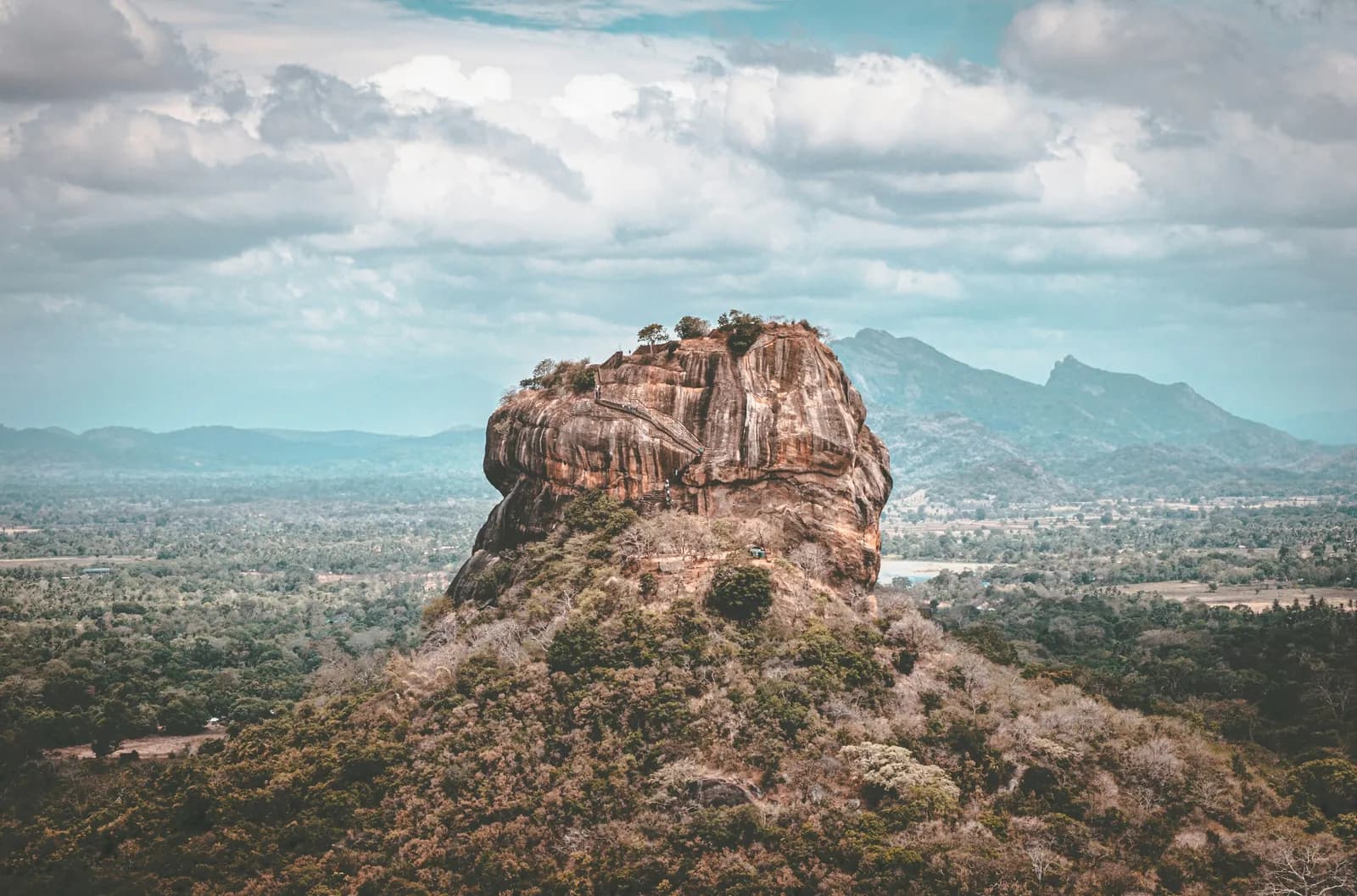
Sigiriya & Dambulla
The majestic heart of ancient Ceylon. Surrounded by dry-zone forests, dramatic monoliths, and 2,000-year-old hydraulic reservoirs (tanks), this region showcases the zenith of ancient Sinhala engineering and Buddhist art.
Best Beaches in Sri Lanka for German Travellers
With 1,340 kilometres of coastline, Sri Lanka offers radically diverse beach experiences. Some coves are sheltered sanctuaries with glassy turquoise water ideal for toddler swimming; others feature world-renowned point breaks that attract seasoned surfers; while deep southern beaches offer untamed romance and nesting sea turtles.
Compare Sri Lanka's 8 premier beaches below, categorised by seasonal swimmability, surf conditions, and crowd vibe:
| Beach & Coast | Best Season | Swimming Safety | Surfing / Snorkel | Vibe & Atmosphere | Crowds | Best For |
|---|---|---|---|---|---|---|
Mirissa Beach South Coast | December to April | Calm & Safe | Surf: Intermediate Snorkel: Good | Lively crescent bay with palm trees, daybeds, and candlelit evening seafood tables. | Lively & Social | Couples, active travellers, whale watching enthusiasts, and social holidaymakers. |
Goyambokka & Silent Beach (Tangalle) South Coast | December to April | Calm & Safe | Surf: None Snorkel: Reef Only | Pristine rocky headlands enclosing secluded golden sand coves with coconut palms. | Quiet & Secluded | Honeymooners, romantic couples, and luxury seekers wanting peaceful beach reading. |
Hiriketiya Bay South Coast | December to April | Calm & Safe | Surf: Beginner Friendly Snorkel: Good | Chic horseshoe cove flanked by jungle; artisanal cafes, yoga shalas, and gentle surf. | Relaxed / Moderate | Young couples, surfers, digital nomads, and families with older children. |
Weligama Bay South Coast | November to April | Calm & Safe | Surf: Beginner Friendly Snorkel: Limited | Broad 2km sandy bay with dozens of surf schools, beach shacks, and family hotels. | Lively & Social | First-time surfers, families with young children, and long coastal beach walks. |
Bentota Beach West Coast | December to April | Calm & Safe | Surf: None Snorkel: Limited | Vast, wide golden sand spit bordered by the calm Bentota River and luxury resorts. | Relaxed / Moderate | Families, watersports fans (jet ski, sailing, river safaris), and quiet luxury. |
Nilaveli Beach (Trincomalee) East Coast | May to September (German Summer) | Calm & Safe | Surf: None Snorkel: Superb | Endless powdery white sand with crystal-clear, shallow turquoise waters facing Pigeon Island. | Quiet & Secluded | German Sommerferien travellers, snorkelers, scuba divers, and families. |
Pasikuda Bay East Coast | May to September (German Summer) | Calm & Safe | Surf: None Snorkel: Good | One of the world's longest shallow reef-protected bays; walk out hundreds of metres in waist-deep water. | Relaxed / Moderate | Families with toddlers or young children, luxury resort guests, and relaxed swimming. |
Arugam Bay East Coast | May to September (German Summer) | Caution Required | Surf: World-Class Snorkel: Limited | World-renowned surf haven with laid-back bohemian cafes, beachfront music, and wildlife lagoons. | Lively & Social | Dedicated surfers, adventurous couples, and lovers of rustic bohemian beach culture. |
Mirissa Beach
South Coast • Peak: December to AprilLively crescent bay with palm trees, daybeds, and candlelit evening seafood tables.
Goyambokka & Silent Beach (Tangalle)
South Coast • Peak: December to AprilPristine rocky headlands enclosing secluded golden sand coves with coconut palms.
Hiriketiya Bay
South Coast • Peak: December to AprilChic horseshoe cove flanked by jungle; artisanal cafes, yoga shalas, and gentle surf.
Weligama Bay
South Coast • Peak: November to AprilBroad 2km sandy bay with dozens of surf schools, beach shacks, and family hotels.
Bentota Beach
West Coast • Peak: December to AprilVast, wide golden sand spit bordered by the calm Bentota River and luxury resorts.
Nilaveli Beach (Trincomalee)
East Coast • Peak: May to September (German Summer)Endless powdery white sand with crystal-clear, shallow turquoise waters facing Pigeon Island.
Pasikuda Bay
East Coast • Peak: May to September (German Summer)One of the world's longest shallow reef-protected bays; walk out hundreds of metres in waist-deep water.
Arugam Bay
East Coast • Peak: May to September (German Summer)World-renowned surf haven with laid-back bohemian cafes, beachfront music, and wildlife lagoons.
Sri Lanka Wildlife and Safaris: Why Sri Lanka Is More Than a Beach Holiday
Sri Lanka is recognized by conservation biologists as one of the world's top 36 global biodiversity hotspots. For German nature enthusiasts, it offers something practically unheard of in Asia: authentic, open-top 4x4 game drives with high concentrations of large apex predators and megafauna.
Sri Lanka boasts the world's highest recorded density of leopards (in Yala Block 1), the largest seasonal gathering of Asian elephants on Earth (Minneriya), and coastal waters frequented by the largest animal to have ever lived on our planet: the majestic Blue Whale.
Yala National Park (Block 1 & 5)
Udawalawe National Park
Minneriya & Kaudulla National Parks
Wilpattu National Park
The Kandy to Ella Scenic Train & Sri Lankan Heritage
Is the Kandy to Ella Scenic Train Journey Worth It?
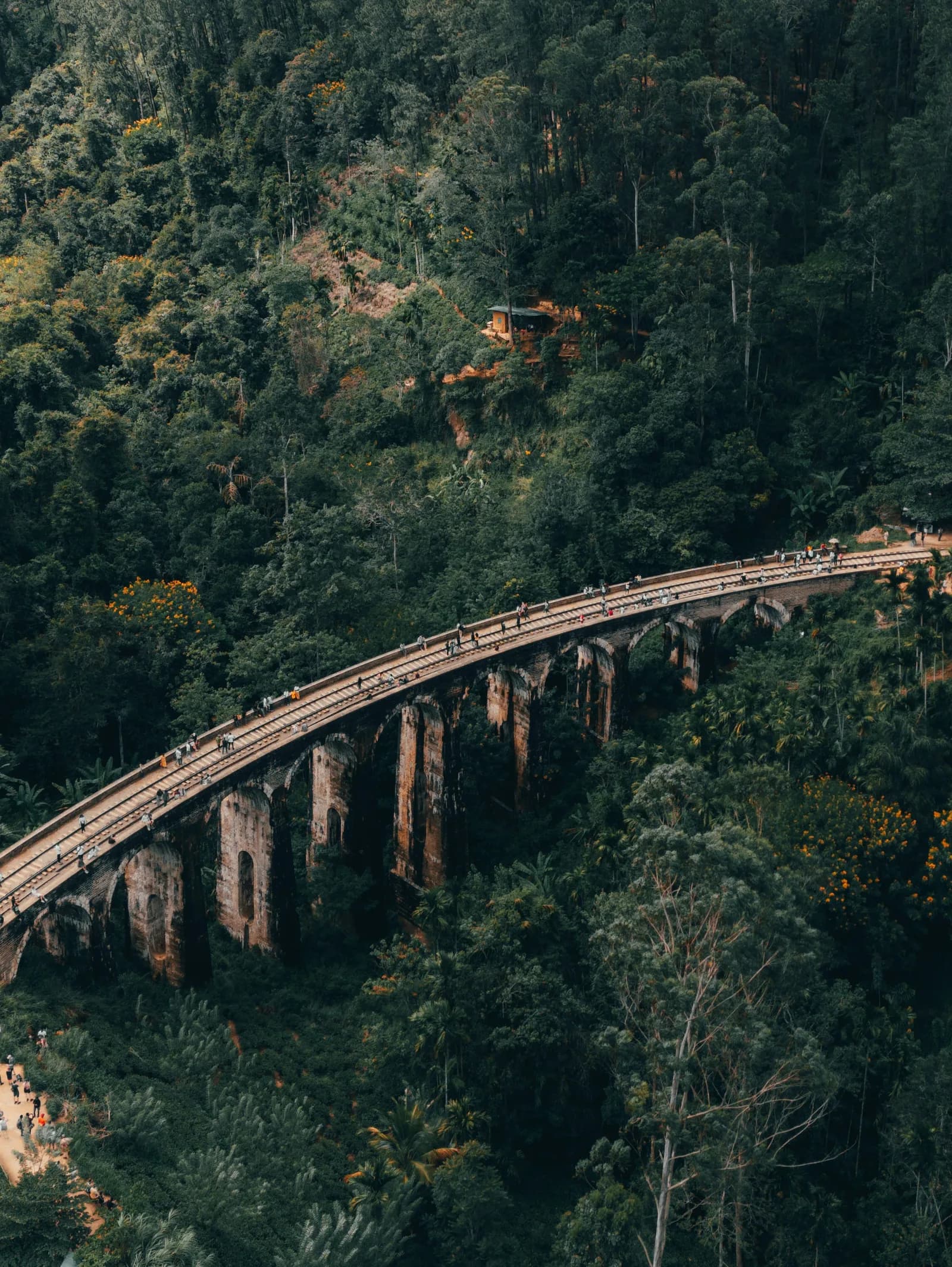
Yes, without hesitation. Built by the British colonial administration in the 19th century to transport tea leaves down to the port of Colombo, the highland railway curves along cliffsides, through hand-carved stone tunnels, and across breathtaking tea valleys.
However, executing this journey smoothly requires local logistical expertise. Sri Lanka Railways opens ticket reservations 30 days prior to departure, and 1st class observation and 2nd class reserved seats routinely sell out within minutes.
The Zelenso Difference: We pre-book your reserved seats in advance. Your private chauffeur-guide drops you directly onto the platform, loads your small daypacks onto the train, and drives your heavy luggage ahead to your hotel in Ella. You enjoy the dramatic open-window ride hands-free without dragging bags through crowded carriages.
Cultural Etiquette for German Visitors
Sri Lanka's cultural heritage is living and active, not a museum relic. When visiting sacred temples such as the Temple of the Sacred Tooth Relic in Kandy, Dambulla Cave Temples, or ancient Anuradhapura:
- Dress Code: Both men and women must cover shoulders and knees. White or light-coloured clothing is traditional and warmly appreciated by locals.
- Footwear: Shoes and hats must be removed before entering holy precincts. Carry a pair of spare socks to protect your soles from sun-baked stone paving.
- Photography: Never pose for photos with your back turned to a Buddha statue. This is considered deeply disrespectful under Sri Lankan law. Photograph the statue itself, but do not stand in front of it taking selfies.
- Respect for Monks: Greet Buddhist monks with a slight bow with your palms pressed together (*Ayubowan*). Women should never touch a Buddhist monk.
What Should German Travellers Expect from Sri Lankan Food?
Sri Lankan cuisine is one of the most vibrant, fragrant, and under-appreciated culinary traditions in Asia. Unlike northern Indian food, which often relies on heavy cream, ghee, and tomato gravies, authentic Sri Lankan cooking is built around fresh coconut milk, toasted black curry powder, roasted spices, and fragrant curry leaves picked fresh from the garden.
Rice & Curry (The National Staple)
Never a single dish, but an elaborate banquet of heirloom red or white rice served alongside 4 to 6 seasonal vegetable curries (dhal, jackfruit, beetroot, okra), spicy coconut sambol, and fresh fish or chicken.
Hoppers (Appa)
Crispy, bowl-shaped fermented rice-flour pancakes with soft, spongy coconut centres, often prepared with a whole egg baked in the middle and served with spicy onion-chilli relish (*Lunu Miris*).
Kottu Roti
The ultimate island street food: flaky flatbread shredded on a screaming hot iron griddle with metal blades, tossed with vegetables, egg, aromatic spices, and savoury gravy.
Coastal Seafood
Yellowfin tuna, jumbo lagoon prawns, mud crabs, calamari, and red snapper pulled straight from the Indian Ocean and grilled over open coconut husks.
Spice Levels & Dietary Needs: Many German visitors worry that authentic food might be uncomfortably spicy. While local preparations can pack serious chilli heat, quality boutique hotels and tourist restaurants understand international palates and readily prepare curries with "mild spice" (*ohne Schärfe*). Moreover, Sri Lanka is exceptionally welcoming to vegetarians, vegans, and gluten-free diners: dozens of traditional dishes are naturally plant-based and dairy-free.
Sri Lanka vs Bali, Thailand, Maldives and Vietnam
When choosing a tropical long-haul holiday from Germany, Sri Lanka frequently competes against established destinations in Southeast Asia and the Indian Ocean. Rather than claiming one destination is universally superior, we compare them objectively across core travel criteria:
| Destination | Flight from Germany | Wildlife & Safari | Culture & Trains | 2-Week Diversity | 14-Day Land Cost pp | Choose This If... |
|---|---|---|---|---|---|---|
Sri Lanka Feature Focus | 9h 45m (Direct from FRA) or 12–14h (1-stop) Yes (SriLankan Airlines from Frankfurt) | Superb (Wild leopards, 200+ wild elephant gatherings, blue whales, sloth bears) | Culture: 6 UNESCO cultural sites, 2,500 years of living Buddhist & Hindu heritage Train: World-famous Kandy-to-Ella scenic blue train through tea valleys | Unmatched: Ancient ruins + misty tea estates + big-game safaris + tropical beaches within short drives | €2,250 – €4,200 pp (Mid to Premium with private driver) | You want extreme geographic diversity, rich wildlife safaris, scenic railways, and private chauffeur travel in two weeks. |
Bali (Indonesia) | 15h 30m – 18h 00m (Minimum 1 stop, often 2) No (No direct flights from Germany) | Minimal (Primarily marine life, monkeys, and captive zoos; no big-game safaris) | Culture: Distinct Balinese Hindu temples, rice terraces, dance & spiritual ceremonies Train: None (No railway network on Bali) | Moderate: Beaches + Hindu culture + volcanic hiking + surfing, but heavy road traffic jams | €2,400 – €4,500 pp | You prioritize trendy boutique beach clubs, world-renowned yoga retreats, café culture, and nightlife over wildlife. |
Thailand | 10h 30m – 12h 00m (Direct flights from FRA/MUC to BKK/HKT) Yes (Thai Airways, Lufthansa) | Moderate (Elephant sanctuaries and national parks, but open vehicle big-game safari culture is rare) | Culture: Spectacular gilded Buddhist wats, royal palaces, floating markets Train: Moderate (Historic Death Railway, but limited mountain observation routes) | High, but typically requires internal domestic flights between northern Chiang Mai and southern islands | €2,100 – €3,800 pp | You love world-famous street food culture, modern shopping, island-hopping catamarans, and lively beach nightlife. |
Maldives | 9h 30m – 10h 30m (Direct seasonal flights from FRA) Yes (Seasonal Condor / Discover Airlines) | Marine only (Spectacular whale sharks, manta rays, coral reef life; no land mammals) | Culture: Minimal tourism access (resorts isolated on private atoll islands) Train: None (Atoll islands) | Low (Monochrome luxury: stunning lagoon, overwater villa, spa, and water sports) | €4,500 – €10,000+ pp | You want pure, motionless overwater villa luxury, complete seclusion, and world-class diving without inland travel. |
Vietnam | 11h 00m – 13h 30m (Direct flights from FRA with Vietnam Airlines) Yes (From Frankfurt to Hanoi / Ho Chi Minh City) | Low (Limited safari infrastructure; focus is on nature landscapes rather than big game) | Culture: Rich imperial history, French colonial architecture, vibrant street life, and war heritage Train: Good (Reunification Express between Da Nang and Hue via Hai Van Pass) | High, but covering North to South in two weeks requires multiple domestic flights and rapid pacing | €2,200 – €3,900 pp | You are fascinated by recent 20th-century history, bustling Asian megacities, limestone karst landscapes (Ha Long Bay), and street food. |
Sri Lanka
Feature DestinationFlight from Germany: 9h 45m (Direct from FRA) or 12–14h (1-stop) (Yes (SriLankan Airlines from Frankfurt))
Wildlife & Safari: Superb (Wild leopards, 200+ wild elephant gatherings, blue whales, sloth bears)
Culture & Scenic Rail: 6 UNESCO cultural sites, 2,500 years of living Buddhist & Hindu heritage • World-famous Kandy-to-Ella scenic blue train through tea valleys
Two-Week Diversity: Unmatched: Ancient ruins + misty tea estates + big-game safaris + tropical beaches within short drives
Bali (Indonesia)
Flight from Germany: 15h 30m – 18h 00m (Minimum 1 stop, often 2) (No (No direct flights from Germany))
Wildlife & Safari: Minimal (Primarily marine life, monkeys, and captive zoos; no big-game safaris)
Culture & Scenic Rail: Distinct Balinese Hindu temples, rice terraces, dance & spiritual ceremonies • None (No railway network on Bali)
Two-Week Diversity: Moderate: Beaches + Hindu culture + volcanic hiking + surfing, but heavy road traffic jams
Thailand
Flight from Germany: 10h 30m – 12h 00m (Direct flights from FRA/MUC to BKK/HKT) (Yes (Thai Airways, Lufthansa))
Wildlife & Safari: Moderate (Elephant sanctuaries and national parks, but open vehicle big-game safari culture is rare)
Culture & Scenic Rail: Spectacular gilded Buddhist wats, royal palaces, floating markets • Moderate (Historic Death Railway, but limited mountain observation routes)
Two-Week Diversity: High, but typically requires internal domestic flights between northern Chiang Mai and southern islands
Maldives
Flight from Germany: 9h 30m – 10h 30m (Direct seasonal flights from FRA) (Yes (Seasonal Condor / Discover Airlines))
Wildlife & Safari: Marine only (Spectacular whale sharks, manta rays, coral reef life; no land mammals)
Culture & Scenic Rail: Minimal tourism access (resorts isolated on private atoll islands) • None (Atoll islands)
Two-Week Diversity: Low (Monochrome luxury: stunning lagoon, overwater villa, spa, and water sports)
Vietnam
Flight from Germany: 11h 00m – 13h 30m (Direct flights from FRA with Vietnam Airlines) (Yes (From Frankfurt to Hanoi / Ho Chi Minh City))
Wildlife & Safari: Low (Limited safari infrastructure; focus is on nature landscapes rather than big game)
Culture & Scenic Rail: Rich imperial history, French colonial architecture, vibrant street life, and war heritage • Good (Reunification Express between Da Nang and Hue via Hai Van Pass)
Two-Week Diversity: High, but covering North to South in two weeks requires multiple domestic flights and rapid pacing
What German Travellers Should Know Before Departure
Your German passport must be valid for at least 6 months beyond your scheduled arrival date. German citizens require a tourist visa, which should be obtained online prior to departure via the official Electronic Travel Authorization (ETA) at eta.gov.lk. Always carry a printed copy of your ETA approval and return flight ticket.
The currency is the Sri Lankan Rupee (LKR). Visa and Mastercard credit/debit cards are widely accepted across hotels, quality restaurants, and supermarkets. Modern ATMs in every town allow cash withdrawals. Clean Euro banknotes can also be exchanged at airport banks.
Mobile 4G/5G coverage is surprisingly fast and reliable island-wide. We recommend picking up a local tourist SIM (Dialog or Mobitel) at the airport arrivals hall for approximately €10 to €15 (giving you 30–50GB data), or activating an eSIM before departing Germany.
Sri Lanka operates on 230V / 50Hz. You will encounter three-pin Type D and British Type G sockets, alongside newer universal wall plugs. Bringing a universal adapter is recommended; high-end boutique hotels generally supply adapters upon request.
Comprehensive international medical travel insurance with medical repatriation (*Rücktransport*) is essential. Quality private hospitals exist in Colombo and Kandy, but out-of-pocket costs must be covered by insurance.
Sri Lanka is officially malaria-free (certified by the WHO). Dengue fever exists in tropical pockets, so bringing effective DEET-based mosquito repellent and wearing light linen trousers at dusk is sensible. Standard German STIKO travel vaccinations (Hepatitis A, Tetanus, Typhoid) are advised.
Is Sri Lanka Safe for German Travellers?
Yes. Sri Lanka is fundamentally a peaceful, welcoming, and safe country for holidaymakers. The German Federal Foreign Office (Auswärtiges Amt) currently confirms that tourist travel throughout all provinces of Sri Lanka is possible without restriction.
Violent crime against foreign tourists is extraordinarily rare. Locals are deeply protective of international visitors, recognizing the vital role tourism plays in the national economy.
Realistic Safety Considerations
- Road Traffic Safety: By far the most tangible physical risk in Sri Lanka is road traffic. Overtaking habits can appear aggressive to European drivers. This is precisely why hiring an experienced, licensed chauffeur-guide who knows local driving dynamics is overwhelmingly recommended over self-driving.
- Ocean Currents: The Indian Ocean can generate powerful undertows and rip currents, particularly on unprotected beaches or during monsoon transition periods. Always pay attention to red warning flags on beaches and ask your hotel staff about safe swimming areas.
- Stray Animals: While village dogs and monkeys are common, avoid petting stray animals. Sri Lanka has rabies control programs, but immediate medical attention is necessary if scratched or bitten.
- Official Advice Link: For live updates, consult the official Auswärtiges Amt Sri Lanka Reise- und Sicherheitshinweise.
Sri Lanka Travel FAQs for German Travellers
How do I travel from Germany to Sri Lanka?
SriLankan Airlines operates the only non-stop direct service between Germany and Colombo Bandaranaike International Airport (CMB), departing Frankfurt am Main (FRA) three times weekly. Thanks to the official Deutsche Bahn Rail&Fly partnership, German travellers can book a seamless ticket connecting any ICE railway station in Germany directly to Frankfurt Airport. For travellers departing from Munich (MUC), Berlin Brandenburg (BER), Düsseldorf (DUS), or Hamburg (HAM), premier one-stop flights with Qatar Airways (via Doha), Emirates (via Dubai), or Etihad Airways (via Abu Dhabi) offer daily departures, exceptional wide-body comfort, and short layovers of 2 to 3 hours.
How long is the flight from Germany to Sri Lanka?
The exact airborne duration on the non-stop Frankfurt to Colombo route is roughly 10 hours on the eastbound outbound flight and 10 hours 30 minutes on the westbound return flight due to prevailing jet streams. When flying with Middle Eastern carriers from German regional hubs like Munich or Berlin, the initial leg to the Gulf (Doha/Dubai/Abu Dhabi) takes roughly 6 hours, followed by a comfortable 2 to 3-hour airport transit and a final 4.5-hour flight across the Arabian Sea into Colombo.
Are there direct flights from Germany to Sri Lanka?
Direct flight connectivity from Germany is concentrated at Frankfurt Airport (FRA), operated by national carrier SriLankan Airlines. While seasonal holiday charter flights have historically operated from other German hubs, scheduled year-round direct travel requires flying via Frankfurt. Travellers across Germany frequently utilise Deutsche Bahn Rail&Fly to connect smoothly to Frankfurt Airport train station directly beneath the terminal.
What is the best time to visit Sri Lanka for German travellers?
Sri Lanka does not experience a single uniform rainy season. It is governed by two distinct monsoons. The Southwest Monsoon (Yala) brings rain to the south and west coasts between May and September, while leaving the East Coast and Cultural Triangle dry, sunny, and calm. The Northeast Monsoon (Maha) affects the east and north between October and January, while leaving the South Coast, Hill Country, and Galle Fort bathed in tropical sunshine. Consequently, Sri Lanka is a genuine 12-month travel destination when matched with the correct regional itinerary.
Is Sri Lanka good to visit in July and August for German summer holidays (Sommerferien)?
July and August are among the best-kept secrets for German families and couples bound to school holidays. While the Mediterranean suffers from extreme 40°C heatwaves, Sri Lanka's eastern shores offer comfortable 30–33°C tropical warmth, protected shallow swimming at Pasikuda, and world-class surfing at Arugam Bay. Furthermore, August hosts the grand Kandy Esala Perahera, Asia's most spectacular historic Buddhist pageant with torchlit dancers, drummers, and decorated elephants.
How much does a Sri Lanka holiday from Germany cost?
On average, land costs in Sri Lanka break down as follows: Comfort boutique travel ranges from €110 to €160 per person per day; Premium bespoke travel ranges from €190 to €290 per person per day; Ultra-luxury retreats (like Ceylon Tea Trails or Aman) range from €380 to €750+ per person per day. Flights from Germany typically range between €720 in shoulder seasons to €1,450 during peak Christmas or August holidays. Sri Lanka offers extraordinary purchasing power for Euro-earners, delivering luxury private service at a fraction of European resort pricing.
How much does a 2-week Sri Lanka trip cost in EUR?
A realistic budget for two people taking a 14-day private journey includes: Private air-conditioned car and chauffeur-guide for 14 days (€950–€1,250 total); 13 nights in curated 4 to 5-star boutique hotels with breakfast (€2,400–€4,200 total); Safari jeep hire, national park permits, and UNESCO monuments (€350–€550 total); Dining, tips, and daily incidentals (€500–€900 total). Adding two return flights from Frankfurt or Munich (€1,600–€2,400) brings the total holiday cost to roughly €6,000 to €10,000 for two adults.
How many days do you need in Sri Lanka?
While 7 to 10 days can cover headline highlights (Sigiriya, Kandy, and one beach or safari base), internal travel speeds in Sri Lanka average 35 to 45 km/h along winding mountain roads. A compressed 7-day trip leads to transfer fatigue. A 14-day journey allows two-night stays at almost every base, balanced afternoon pool breaks, and proper multi-day beach downtime. Travellers with 3 weeks (21 days) can explore the untamed North (Jaffna) or enjoy deep rainforest trekking.
Is 2 weeks enough for Sri Lanka?
Two weeks is the standard holiday duration for German holidaymakers and perfectly matches the geographic scale of the island. Within 14 days, you can cover Negombo, Sigiriya, Dambulla, Kandy, Nuwara Eliya, Ella, Yala or Udawalawe National Park, and the southern beaches between Tangalle and Galle Fort without driving more than 2.5 to 3.5 hours on any single travel day.
Is Sri Lanka expensive for German tourists?
The Euro holds strong purchasing power in Sri Lanka. Day-to-day incidental costs such as fresh tropical fruits, king coconuts (€0.80), authentic local rice & curry (€3–€6), local Lion beer (€2.50), and certified Ayurvedic treatments (€30–€55) are remarkably accessible. The primary expenses are five-star branded luxury hotels and government entrance tickets for major UNESCO monuments (Sigiriya approx. €32, wildlife park entry approx. €25–€35), which are standardized for international visitors.
Is Sri Lanka safe for German travellers?
Sri Lankan hospitality is legendary, and locals treat international visitors with profound warmth and respect. The practical safety risks are standard for tropical developing countries: chaotic road traffic (making hiring a professional driver strongly advised), strong ocean undercurrents on unpatrolled beaches, and standard precautions against mosquito-borne illnesses like dengue. The Auswärtiges Amt advises general travel vigilance, ensuring you use registered drivers and avoid political demonstrations.
Do German citizens need a visa or ETA for Sri Lanka?
German citizens travelling for tourism can apply online for a 30-day tourist ETA before flying. Always apply exclusively through the official government portal (eta.gov.lk) and beware of predatory third-party visa broker websites that charge exorbitant processing fees. Ensure all passport details are entered with 100% precision. You must also hold a confirmed return or onward flight ticket and proof of sufficient funds. Requirements can change, so always verify with the Auswärtiges Amt before travelling.
Can German citizens drive in Sri Lanka, or should they hire a private driver?
In Sri Lanka, driving habits follow an unwritten hierarchy of size: state and private buses dominate overtaking lanes, three-wheelers (tuk-tuks) weave unpredictably, and stray cattle or dogs frequently rest on warm tarmac. Furthermore, renting a vehicle without a driver requires visiting the Automobile Association of Ceylon (AAC) in Colombo to obtain a temporary local driving permit. For an extra €25–€40 per day over the cost of a rental car, a professional chauffeur-guide manages all navigation, tolls, parking, and traffic hazards while sharing rich cultural insights.
Is it better to hire a private driver in Sri Lanka?
In Sri Lanka, a 'driver' is typically a trained, Tourist Board-licensed chauffeur-guide who acts as your personal concierge. They handle daily vehicle cleaning, fuel, highway tolls, and route logistics while staying in complimentary driver quarters provided by tourist hotels. You can pause whenever you see a wild peacock, an elephant crossing, or a picturesque tea estate, creating an entirely bespoke travel experience.
What is the best Sri Lanka itinerary for a 14-day holiday?
This route maximizes geographic and cultural diversity while maintaining smooth transfer times of 2 to 3.5 hours per leg. It balances intense morning cultural explorations with tranquil afternoon relaxation. For German summer holidaymakers in July/August, the route adapts smoothly by replacing the South Coast with the tranquil, sun-drenched East Coast beaches of Pasikuda or Nilaveli and the Minneriya Elephant Gathering.
What are the best places to visit in Sri Lanka?
For culture: Sigiriya, Dambulla Cave Temples, and ancient Polonnaruwa. For nature and cool mountain scenery: Nuwara Eliya, Horton Plains World's End, and Ella Gap. For wildlife: Yala (leopards), Udawalawe (elephants), and Minneriya (The Gathering). For coastal living: Galle Fort, Tangalle's private coves, Mirissa's whale watching bay, and the tranquil coral waters of Nilaveli on the East Coast.
What are the best beaches in Sri Lanka for German travellers?
Sri Lanka's coastline caters to every travel profile. If you desire quiet tropical isolation with high-end boutique resorts, Tangalle is unmatched. If you want social beach cafes, fresh seafood grills, and beginner surfing, Mirissa and Hiriketiya are perfect. For families travelling with young children during German Sommerferien, Pasikuda Bay on the East Coast features a shallow reef allowing you to wade hundreds of metres into tranquil crystal-clear waters.
What are the best national parks in Sri Lanka for safaris?
Unlike many Asian nations where wildlife is elusive or confined to dense jungle, Sri Lanka's national parks offer open, cinematic wildlife viewing comparable to African safaris. In addition to Yala and Udawalawe, Wilpattu National Park in the northwest offers untamed, crowd-free wilderness around natural sand-rimmed lakes (villus), and Sinharaja Rainforest provides world-class birdwatching for endemic tropical species.
Is Sri Lanka good for a honeymoon from Germany?
Unlike single-island beach destinations where couples spend two weeks confined to a single resort, a Sri Lanka honeymoon offers an unforgettable shared adventure. Couples can wake up to misty mountain views at Ceylon Tea Trails, track wild leopards in Yala while staying in luxury cocoon tents, take an open-door scenic mountain train ride, and unwind in an oceanfront pool villa in Tangalle or a romantic colonial suite inside Galle Fort.
Is Sri Lanka suitable for families travelling with children (mit Kindern)?
For a successful family holiday, pacing is key. Limit drives to under 3 hours, select hotels with expansive swimming pools, and spend at least 2 to 3 nights at each destination. Food is easily adapted (hotels readily prepare non-spicy pasta, fresh tropical fruits, grilled fish, and mild chicken curries), healthcare in major towns is reliable, and private chauffeur travel means you can stop anytime for bathroom breaks or snacks.
What should German travellers pack for Sri Lanka?
Sri Lanka's coastal and cultural plains are warm and tropical year-round (28–33°C), demanding light, natural fabrics. However, elevations in Nuwara Eliya and Ella reach up to 1,800m, where evening temperatures can dip to 12–16°C, making a warm layer essential. Slip-on shoes are convenient because footwear must be removed at the entrance to all Buddhist temples, and carrying a pair of spare socks protects your feet from hot stone courtyard floors.
How does tipping and currency work in Sri Lanka for German visitors?
German travellers can easily withdraw rupees using standard debit or credit cards at modern ATMs (Commercial Bank, Sampath Bank, Hatton National Bank) located across all major towns. Euro banknotes in clean, undamaged condition can also be exchanged at competitive rates at airport arrival booths or licensed exchange bureaus. Tipping is a vital part of the tourism economy and deeply appreciated by guides, drivers, safari trackers, and hotel staff.
Start Designing Your Sri Lanka Journey
Tell us about your timing, holiday pace, and hotel preferences. Our destination specialists will craft an individual, fully transparent proposal tailored specifically for you.