Quick answer
Is Sri Lanka safe to visit in 2027?
Yes, for most travellers. As of November 2026 the UK Foreign Office advises against travel to no part of Sri Lanka and says violent crime against foreigners is rare. The risks that matter are road accidents, petty scams and card fraud, dengue and monsoon weather. A professional driver, insect repellent and a little seasonal planning deal with most of them.
- UK: no 'advise against travel' areas (updated 21 Sep 2026)
- US: Level 2, the same level as much of Europe
- Biggest real risk: roads, especially at night
- Plan around the monsoons and protect against mosquitoes
- UK FCDO
- No areas advised against
- US State Dept
- Level 2 of 4
- Tourist hotline
- 1912 (24 h)
- Main risk
- Road traffic
In this guide (10 sections)
Sri Lanka welcomed a record 2.36 million visitors in 2025 and about 1.83 million between January and late October 2026. The island's reputation was dented by the 2022 economic crisis and protests, and by Cyclone Ditwah in late 2025, so it is fair to ask. For live rail, weather and entry status, see our Sri Lanka travel advisory page. This guide covers the bigger question: how safe it is, and for whom.
What the UK, US and Australian governments say
Government travel advice is written cautiously, so it is the right starting point: if it says go, the remaining risk is mostly ordinary travel risk. Here is the wording each government uses for Sri Lanka, as checked in November 2026.
| Government | Overall level | Key wording | Last change we saw |
|---|---|---|---|
| UK (FCDO) | No areas advised against | "Violent crimes against foreigners are rare." Advice covers flooding, landslides, protests and terrorism. | 21 Sep 2026: rainfall, flooding and landslide information added |
| United States | Level 2: Exercise Increased Caution | Cites civil unrest and terrorism. A landmine line was added to all US advisories worldwide. | 14 Oct 2025 |
| Australia (Smartraveller) | Exercise a high degree of caution | Mentions public demonstrations, terrorism risk, saltwater crocodiles, flooding and landslides. | Check the page for the current date |
The US Level 2 rating sounds alarming until you see the company it keeps: the US applies Level 2 to many European destinations too. When the October 2025 update added a reference to landmines, Sri Lankan media reported that the line had been added worldwide and “does not reflect any new or increased risk”. If you visit the far north, stay on roads and marked paths and follow local signs.
The FCDO does say that “terrorist attacks in Sri Lanka cannot be ruled out” and that protests “can happen anywhere… at short notice”. That wording is standard for many countries, including the UK's own neighbours. In practice it means: avoid demonstrations, and follow local news or your hotel's advice if something happens.
Crime and scams: what actually happens
Serious crime against visitors is uncommon. The FCDO notes an “increase in incidents of low-level opportunistic crime” and warns plainly that “bank card fraud is common”. These are the situations we hear about most from guests, with the simple fix for each:
| Situation | What happens | What to do |
|---|---|---|
| Tuk-tuk fares | A price far above the going rate, or a 'misunderstanding' at the end | The FCDO's advice: "Agree a price before you set off or look for one with a working meter." In cities, ride-hailing apps such as PickMe show the price before you book. |
| Card skimming | Cards copied at ATMs or in shops | Use ATMs inside banks, keep your card in sight, and turn on app alerts. |
| 'Helpful' strangers | A friendly approach leading to a gem shop, spice garden or 'special festival' | Politely decline unplanned detours. Buy gems only from shops that give a certificate and a receipt. |
| Unofficial guides | Someone at a site insists on guiding you, then asks for a large fee | Agree any fee first, or use the guide arranged by your hotel or tour company. |
| Fake visa websites | Look-alike sites charge for the ETA | Apply only at eta.gov.lk. See our ETA guide for the scam domains named by Sri Lanka's immigration department. |
Keep a photo of your passport on your phone, carry a day's cash rather than everything, and use the hotel safe. Pickpocketing is most likely in crowded places such as Colombo's Pettah market, busy trains and bus stations.
Roads: the risk most visitors underestimate
- Road deaths, 2025
- 2,710
- Sri Lanka Police, up 322 on 2024
- Fatal crashes, 2025
- 2,562
- Up from 2,287
- Highest-risk time
- After dark
- FCDO
- Typical hill-road speed
- 40–50 km/h
- Planning figure
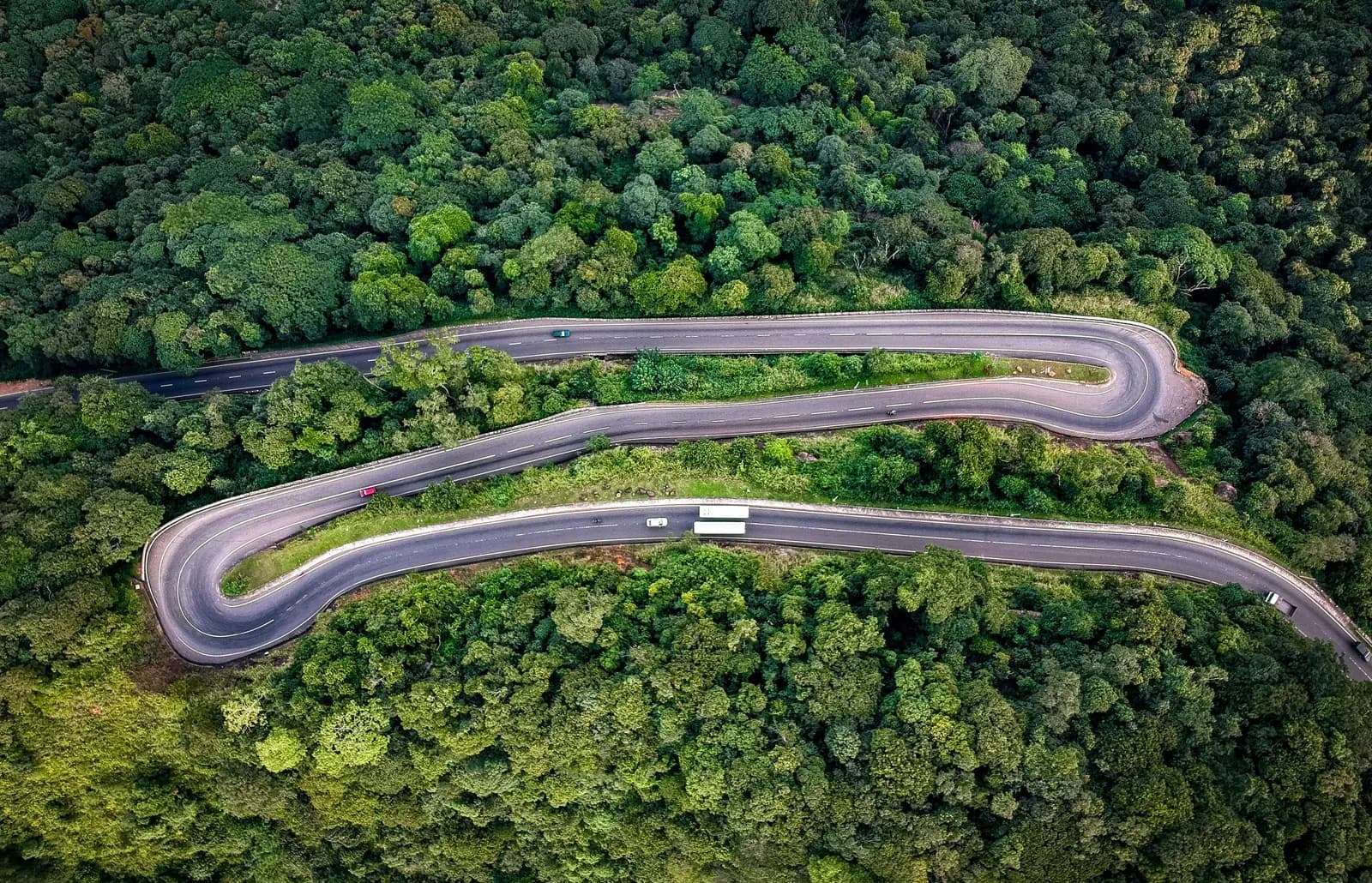
If one thing is likely to hurt a visitor in Sri Lanka, it is a road accident, not crime. Police recorded 2,710 road deaths in 2025, up 322 on the year before. The FCDO puts it bluntly: “Driving is erratic and there are frequent road accidents, particularly at night.” It adds that buses are driven fast and rarely give way.
That is why we, and most experienced travellers, follow three rules:
- Do not drive yourself. Unfamiliar rules of the road, buses overtaking on bends and roaming animals make self-driving a poor choice for a holiday.
- Avoid long drives after dark, especially on hill roads. Plan days so you arrive before sunset.
- Choose a professional driver who is rested, with a seatbelt-equipped, well-maintained vehicle. Ask about daily driving limits and the driver's accommodation.
Tuk-tuks are fine for short hops in towns but have no seatbelts. For anything longer than a few kilometres, a car is safer.
Weather, monsoons and what Cyclone Ditwah changed
Sri Lanka has two monsoons that hit opposite coasts at opposite times. The south-west monsoon brings rough seas to the west and south coasts roughly from May to September, while the north-east monsoon affects the east and north around December to February. The inter-monsoon months can bring heavy afternoon storms almost anywhere. Swimming off a monsoon-hit beach is the most common way visitors get into trouble in the sea: rip currents are strong, and red flags mean what they say.
Cyclone Ditwah, November 2025
Cyclone Ditwah made landfall around 27–28 November 2025 and caused the country's worst flooding and landslides in years. By 14 December 2025 the Disaster Management Centre reported 644 deaths and 183 people missing. The World Bank estimated damage at about US$4.1 billion, around 4% of GDP.
Recovery since then, as it affects travellers:
- Roads: the main Colombo–Kandy road reopened on 4 December 2025, and about 99% of damaged roads had temporary repairs by early January 2026.
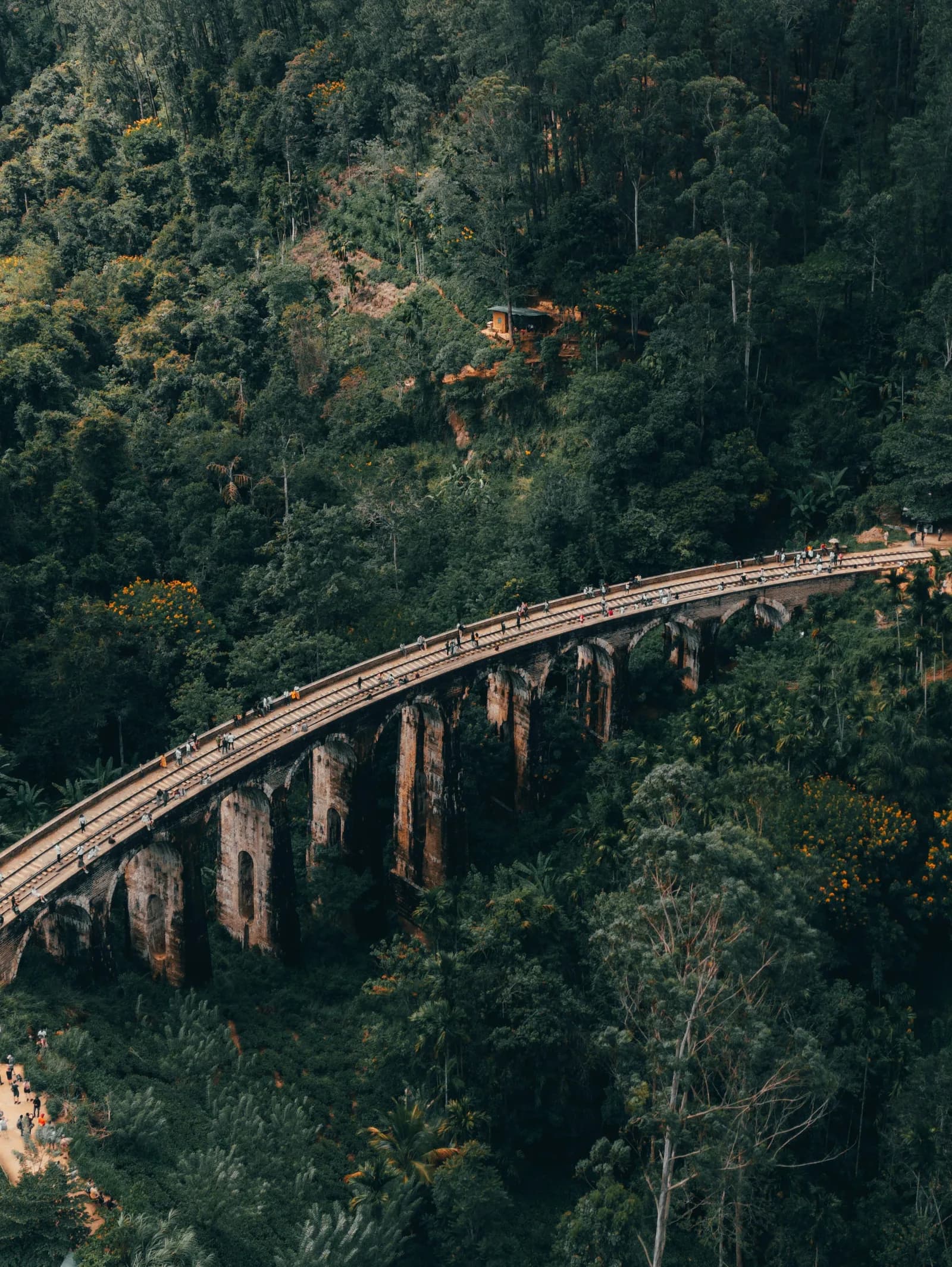
- Railway: the hill-country line was damaged at 223 places. Nanu Oya to Ella and Badulla runs again, but no train currently reaches Kandy. Details are in our Kandy to Ella train guide.
- Hotels and sights: the main tourist areas are operating normally.
The simplest safety decision you can make is choosing the right coast for your month. Our 2027 month-by-month guide does that for you.
Health: dengue, vaccines and food
Dengue is the health risk to take seriously. 2026 has been a heavy year: about 92,595 cases and 68 deaths were reported by mid-August, according to figures from the National Dengue Control Unit, though cases had been falling since early July. Dengue is spread by day-biting mosquitoes, often in towns as well as countryside, and there is no routine travel vaccine for it. Prevention is practical:
- Use a DEET or picaridin repellent, especially in the early morning and late afternoon.
- Wear long, light sleeves when you can, and sleep in air-conditioned or screened rooms.
- See a doctor if you develop a sudden high fever, and avoid ibuprofen and aspirin until dengue has been ruled out.
The US CDC (page reviewed August 2026) recommends routine vaccines for all travellers, typhoid for most, and hepatitis A and B for many. Japanese encephalitis and rabies vaccines are suggested for some travellers, depending on how and where you travel. A yellow fever certificate is needed only if you arrive from a country with yellow fever risk. Talk to your travel clinic six to eight weeks before you go.
Drink bottled or filtered water, and enjoy the food: freshly cooked rice and curry from a busy kitchen is one of the safest meals on the island. Stray dogs are common; do not touch them, and get any bite or scratch treated the same day.
Fuel quotas and what they mean for your trip
Since 15 March 2026 Sri Lanka has used a QR-code fuel pass with weekly quotas for every vehicle, after fuel supply concerns linked to events in the Middle East. Tourism vehicles receive double the standard quota, so registered tour vehicles can keep running normal itineraries. It is another reason not to self-drive: a rental car on a standard quota could leave you short on a long route.
Fuel prices were last revised on 1 November 2026 (petrol 92 at Rs424 a litre, auto diesel at Rs397). If you hire a car and driver, check that fuel is included in the daily rate. Our car and driver rate benchmarks explain what a fair quote includes.
Safety for women, families, older travellers and LGBTQ+ visitors
Solo women
Plenty of women travel alone here and love it, and many Sri Lankans go out of their way to help. The FCDO is honest that “women continue to report incidents of verbal and physical harassment by men”. What helps: dress modestly away from the beach (shoulders and knees covered at temples), sit near other women or families on public transport, keep evening plans to busy places, and book transport rather than accepting lifts. A private driver arranged through a reputable company, with reviews you can read, removes the biggest unknown.
Families with children
Sri Lanka is very family-friendly: children are welcomed everywhere. The practical risks are heat, sun, the sea and the roads. Bring child seats or ask for them in advance (they are not always available as standard), swim only at beaches with calm water in your month, and keep drive times short. Our family holidays page shows routes built for children.
Older travellers and limited mobility
The main challenges are steps and heat. Sigiriya has around 1,200 steps; Dambulla and Little Adam's Peak involve steady climbs. Climb early, carry water, and ask for hotels with lifts or ground-floor rooms. Good private hospitals operate in Colombo and larger towns, so make sure your travel insurance covers medical evacuation.
LGBTQ+ travellers
Same-sex sexual activity remains illegal under sections 365 and 365A of the Penal Code, and a bill to repeal them has not passed. The FCDO says “we are not aware of any prosecutions”. Most LGBTQ+ visitors travel without problems; hotels are used to welcoming all couples, and discretion in public (which applies to all couples) avoids unwanted attention.
Emergency numbers and who to call
| Need | Number | Notes |
|---|---|---|
| Tourist hotline (Sri Lanka Tourism) | 1912 | 24 hours, for visitors. Run by the tourism authority, not the police. |
| Police emergency | 119 | The widely published police emergency number. Confirm with your hotel on arrival. |
| Your travel insurer | On your policy | Call before arranging any non-emergency hospital treatment. |
| Your embassy | See your government's website | The UK High Commission is in Colombo. |
What a private chauffeur changes
Most of the risks above come down to transport and local knowledge. A good private driver, often called a chauffeur-guide here, deals with several at once:
- Roads: an experienced driver who knows the routes, plans to arrive before dark and is not rushing.
- Scams: no tuk-tuk haggling between towns, and someone to tell you what a fair price is.
- Weather: local knowledge of which roads are flooding and when to change plans.
- Fuel quotas: registered tourism vehicles get the double quota.
- Help when you need it: someone who speaks the language if you need a pharmacy or a doctor.
Still deciding whether to go? Start with the paperwork: our ETA and visa guide explains the free tourist ETA for 40 countries, and our 2027 cost guide sets out the budget.
Frequently asked questions
Is Sri Lanka safe to visit in 2027?
Yes, for most travellers. As of November 2026 the UK Foreign Office does not advise against travel to any part of Sri Lanka, and says violent crime against foreigners is rare. The real risks are road accidents, petty scams, mosquito-borne illness and monsoon weather, all of which you can plan around.
What level is the US travel advisory for Sri Lanka?
Level 2, Exercise Increased Caution, dated 14 October 2025. It cites civil unrest and terrorism. A line about landmines was added to US advisories worldwide at the same time and, as reported in Sri Lanka, does not reflect any new or increased risk. Level 2 is the same level the US applies to many European countries.
Is Sri Lanka safe for solo female travellers?
Many women travel Sri Lanka alone without problems, but the UK Foreign Office notes that women continue to report verbal and physical harassment by men. Dress modestly away from the beach, choose well-reviewed accommodation, avoid empty beaches and unlit streets at night, and use booked transport rather than flagging down rides after dark.
Is it safe to drive yourself in Sri Lanka?
We do not recommend it. The UK Foreign Office describes driving as erratic, with frequent accidents, particularly at night, and police reported 2,710 road deaths in 2025. Buses drive fast and rarely give way. Most visitors hire a car with a professional driver, which also costs less than you might expect.
Did Cyclone Ditwah make Sri Lanka unsafe to visit?
No. Cyclone Ditwah in late November 2025 caused severe flooding and landslides, with 644 deaths reported by mid-December 2025. Main roads were temporarily repaired within weeks, but the hill-country railway is still only partly open, so it mainly affects how you get around tea country rather than your safety.
Is dengue a problem in Sri Lanka in 2026 and 2027?
2026 has been a heavy dengue year, with about 92,595 cases reported by mid-August, although numbers had been falling since early July. There is no routine travel vaccine for it, so protection means repellent, long sleeves at dawn and dusk, and accommodation with screens or air conditioning.
Is Sri Lanka safe for LGBTQ+ travellers?
Same-sex sexual activity remains illegal under sections 365 and 365A of the Penal Code. The UK Foreign Office says it is not aware of any prosecutions. Most LGBTQ+ visitors travel without incident, but public displays of affection are best avoided for everyone, and discretion is advised.
What number do I call in an emergency in Sri Lanka?
Sri Lanka Tourism runs a 24-hour hotline on 1912 for visitors. The widely published police emergency number is 119. Save your hotel, your driver and your travel insurer's emergency line in your phone before you land, and confirm local numbers with your hotel on arrival.
Is Arugam Bay safe after the 2024 security alert?
The October 2024 US Embassy alert for Arugam Bay was later lifted, and in 2026 police and the Special Task Force have run 24-hour security in the main tourist areas. Check the current UK and US advice for the region before you travel.
How we researched this guide
Written by the Zelenso Travel planning team in Sri Lanka from the trips we run, then checked against the primary sources below. Facts were last checked on 2 November 2026. Rules, fees and timetables change: confirm anything time-critical with the official source before you travel.
- Sri Lanka travel advice (summary, safety and security, entry requirements)UK Foreign, Commonwealth & Development Office · checked Nov 2026
- Sri Lanka travel advisoryUS Department of State · checked Nov 2026
- Sri Lanka travel adviceSmartraveller (Australian Government) · checked Nov 2026
- "No new risks": US travel advisory unchangedNewsfirst · checked Nov 2026
- Sri Lanka travellers' healthUS Centers for Disease Control and Prevention · checked Nov 2026
- Road deaths rise in Sri Lanka in 2025The Star (Xinhua, citing Sri Lanka Police) · checked Nov 2026
- Cyclone Ditwah death toll updateAda Derana (Disaster Management Centre figures) · checked Nov 2026
- Dial 1912: 24-hour tourist hotlineSri Lanka Tourism Development Authority · checked Nov 2026